
English packs several meanings into “can”. Thai uses different words depending on what makes something possible. These four choices can overlap, but each highlights a different idea.
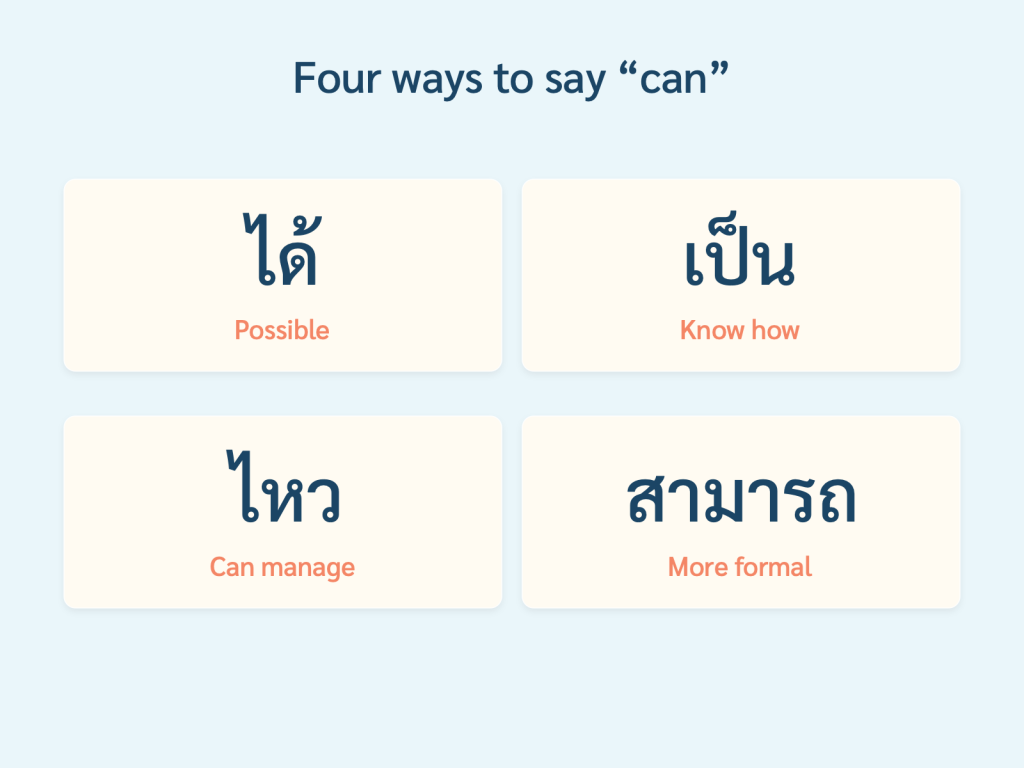
ได้ (dâai): it’s possible
Use ได้ after the action for ability, opportunity or permission. It is a common, everyday choice.
วันนี้ฉันไปได้
I can go today.
เป็น (bpen): know how
Use เป็น after an activity to say you have learned the skill, such as swimming or driving.
ฉันว่ายน้ำเป็น
I know how to swim.
ไหว (wǎi): can manage
Use ไหว after the action when having enough strength or energy matters. ไม่ไหว means you cannot manage it.
ฉันเดินต่อไม่ไหว
I can’t walk any further.
สามารถ (sǎa-mâat): be able to
This is a more formal way to express ability. It goes before the action, often with ได้ at the end.
คุณสามารถจองออนไลน์ได้
You can book online.
For example, you may know how to swim (เป็น), but be too tired to continue today (ไม่ไหว). The situation helps you choose.